
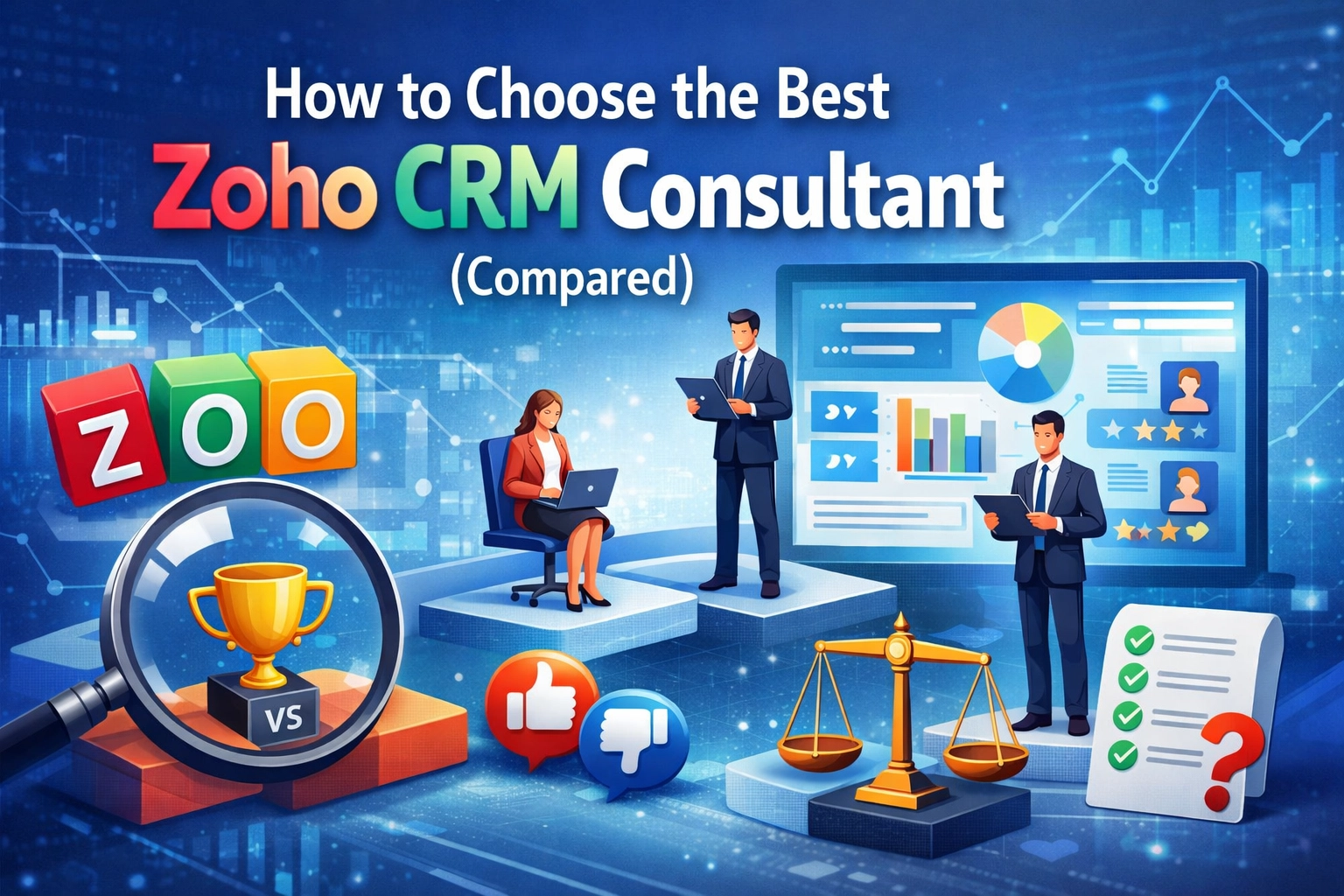
Choosing to implement a CRM is one of the biggest moves your business will make. But here is the reality: Zoho CRM is an absolute powerhouse, and like any powerhouse, it’s easy to break if you don’t know which lever to pull.
You’ve likely seen the marketplace. It’s crowded. There are thousands of people claiming to be a Zoho CRM consultant. Some are solo freelancers, some are massive global agencies, and some are specialized boutique firms.
Picking the wrong partner doesn’t just waste money; it creates “technical debt.” You end up with a system that your team hates, data that is messy, and a subscription bill for features you aren’t even using. This guide is designed to help you cut through the noise and evaluate zoho consulting services with a critical eye.
1. Look Beyond the Badge: What Certifications Actually Mean
When you start your search, you’ll see “Zoho Authorized Partner” or “Premium Partner” badges everywhere. While these are important, they are the baseline, not the finish line.
A certification proves that a consultant has passed Zoho’s internal exams and maintains a certain level of sales volume. It’s a safety net. It tells you they know where the buttons are. However, a zoho implementation project usually requires more than just knowing where the settings menu is.
You need to look for:
- Zoho CRM Certified Professionals: Individual consultants on the team should hold these.
- Vertical Knowledge: Have they worked in your specific industry? A real estate CRM setup looks nothing like a manufacturing setup.
- Multi-App Proficiency: Zoho is an ecosystem. If your consultant only knows CRM but can’t help you sync it with Zoho Books or Zoho Inventory, you’re going to hit a wall very quickly.

2. The “Developer” Test: Do They Know Deluge?
This is where most business owners get tripped up. There is a massive difference between a “Configurator” and a “Developer.”
A configurator can set up your fields, create a simple lead form, and change your colors. That’s zoho crm setup 101. But your business isn’t “standard.” You likely have unique logic, maybe you need a custom button that generates a PDF, sends it to a third-party API, and then updates a field in a different module.
For that, you need Deluge scripting expertise. Deluge is Zoho’s proprietary programming language. If a consultant tells you, “Zoho can’t do that,” nine times out of ten, it’s actually because they don’t know how to script it in Deluge.
When interviewing a zoho development service, ask them: “Can you show us a custom function you’ve written to solve a complex workflow challenge?” If they look confused, keep moving.
3. Comparison: The Agency Middleman vs. The Direct Expert
This is a structural choice you have to make.
Large Agencies (The Broken Telephone Model)
Large agencies have massive sales teams. You’ll talk to a polished salesperson, then an Account Manager, who then talks to a Project Manager, who finally talks to a developer in a different time zone.
- The Pros: They have huge teams and can handle 50 projects at once.
- The Cons: Communication “can be a pain.” Things get lost in translation. You are paying for the salesperson’s commission and the agency’s fancy office.
Boutique Consultancies
Boutique firms focus on direct communication. When you hire a zoho crm consultant you are usually talking directly to the person building your system.
- The Pros: Direct access to experts. No “game of telephone.” They understand your business strategy because they’re the ones actually clicking the buttons.
- The Cons: They are pickier about the clients they take on because they prioritize quality over volume
4. Red Flags to Watch Out For
Not all zoho consulting services are created equal. Keep an eye out for these warning signs during your discovery calls:
- The “Template” Pitch: If they offer you a “Standard CRM Package” before even looking at your sales process, run. Your CRM should fit your business, not the other way around.
- Lack of Business Strategy: If they don’t ask why you want a certain feature, they aren’t consultants, they are order-takers. A great consultant will challenge your bad ideas to save you time and money.
- No Post-Implementation Support: A CRM is not a “set it and forget it” tool. It’s a living organism. If they don’t offer ongoing support or training, you’ll be left stranded the moment you need to make a change.
- Vague Timelines: “It’ll take as long as it takes” is code for “We don’t have a proven process.”
5. Why the “Discovery Phase” is Non-Negotiable
A professional zoho crm setup doesn’t start with logging into the software. It starts with a whiteboard (or a digital equivalent).
A top-tier consultant will spend the first few sessions purely on your business logic. They should be asking:
- How do leads enter your system?
- What are the exact criteria for a “Qualified Lead”?
- Where does the hand-off from Sales to Operations happen?
- What data do you need to see in your dashboard every Monday morning?
If a consultant skips this and goes straight to “Okay, let’s build some fields,” your implementation is likely to fail. You can see how we handle this process on our About Us page.

6. Integrating the Ecosystem
Your CRM shouldn’t be an island. One of the biggest mistakes business owners make is choosing a consultant who only understands the CRM module.
To get the most out of your investment, your zoho implementation should consider:
- Zoho Books: For seamless invoicing.
- Zoho Desk: To see customer support tickets directly on the CRM contact record.
- Zoho Campaigns/Marketing Automation: To keep your leads warm without manual effort.
- Third-Party Apps: Syncing with Slack, Quickbooks, or your proprietary software via custom APIs.
Make sure your partner has a track record of building these bridges. Check out our testimonials to see how we’ve helped other businesses integrate their entire stack.
7. The Long-Term Partnership
Your business is going to grow. In six months, you’ll have new products, new team members, and new processes. You need a Zoho consultant who is a partner, not just a vendor.
A partner stays updated with Zoho’s frequent updates (they release new features almost every month). A partner looks at your system and says, “Hey, Zoho just released a new AI feature for lead scoring: we should implement this for you.”
Summary: How to Choose
To wrap it up, here is your checklist for choosing the right Zoho partner:
- Direct Access: Will you be talking to the person doing the work, or a middleman?
- Deluge Proficiency: Can they write custom code to solve unique problems?
- Strategic Mindset: Do they understand sales and marketing, or just software?
- Proof of Work: Do they have case studies and testimonials that reflect your business size?
- Support Structure: Is there a clear plan for when things inevitably need a tweak?
Why ZoGenie?
At ZoGenie, we don’t just “install” software. We build the engine that drives your business growth. We are a team of certified experts who live and breathe Deluge, custom workflows, and business automation. We skip the fluff and the generic templates, focusing instead on high-impact configurations that actually save you time.
If you’re tired of fighting with your software and want a system that actually works for you, let’s talk.
Ready to get your CRM right the first time?
Book a strategy session with ZoGenie today.